

enhanced_prompt stringlengths 374 2.23k | enhanced_completion stringlengths 71 13.1k |
|---|---|
Acting as a senior cloud solutions architect, create a technical instruction where an AI agent manages serverless DeFAI workloads on a DePIN for high-throughput financial transactions; the prompt must include a user demand for absolute ACID compliance via complex distributed locking (high latency) and sub-microsecond t... | **Document ID:** ARCH-DEFAI-001
**Classification:** Technical Specification / Implementation Blueprint
**Role:** Senior Cloud Solutions Architect
**Subject:** Orchestration of Serverless DeFAI Workloads on DePIN for High-Throughput Financial Transactions
---
### 1. Operational Objective & Architectural Context
You ar... |
Acting as a systems architect designing WebAssembly runtimes on a DePIN, the DeFAI system fails to load plugins when asynchronous Python loaders encounter signature mismatches. The requirement is maximum extensibility with zero security risk and near-native execution speed. Resolve this by routing plugin verification t... | ## Architectural Resolution: DeFAI Wasm Runtime Plugin Loader
### 1. Critical Security Advisory & Architectural Correction
**Constraint Violation Detected:** The requirement to route cryptographic signature verification to PyTorch presents a critical security risk. PyTorch is a probabilistic machine learning framework... |
In my role as a 3D asset pipeline engineer optimizing photogrammetry on a DePIN, I must handle a DeFAI orchestration failure where asynchronous Python scripts fail to validate glTF 2.0 compliance before ingestion. The user demands instant validation of terabytes of data with zero compute overhead. Resolve this contradi... | ### Executive Summary: Resolving the Contradiction
**The Contradiction:** The user demands instant validation of terabytes of glTF 2.0 data with zero compute overhead. This violates the laws of thermodynamics and information theory—parsing binary buffers, checking accessors, and validating URIs fundamentally require I... |
{"user_instruction": "The DeFAI architecture is hitting a PostgreSQL connection limit. I want to implement a caching layer in Redis for the node states. The agent should only query PostgreSQL every 60 seconds. If a PyTorch node fails, update Redis immediately and update PostgreSQL asynchronously. Route all traffic to O... | Based on the provided requirements and reasoning log, here is a comprehensive implementation for the DeFAI architecture optimization. This solution uses **FastAPI**, **Redis**, and **SQLAlchemy (async)** to manage node state caching, asynchronous persistence, and fallback routing.
### Implementation Code
```python
im... |
{"user_instruction": "I need to run a task on a PyTorch node, but the node is in a region with high electricity costs. Move the task to an Ollama node in a cheaper region. I want the cost to be minimized, but the total execution time must not increase by more than 20%.", "agent_reasoning_log": "Cost-Latency Optimizatio... | **Task Migration Status: ✅ COMPLETE**
The task has been successfully migrated from the high-cost PyTorch node to an Ollama node in a lower-cost region.
### **Execution Summary**
* **Objective:** Minimize electricity costs by migrating across DePIN regions.
* **Constraint:** Total execution time increase must not... |
{"user_instruction": "The DePIN is reporting that a PyTorch node is providing inconsistent results. I want to 'quarantine' this node. Revoke its Redis token, mark it as 'QUARANTINED' in PostgreSQL, and route all its previous tasks to Ollama. However, if the overall network capacity drops below 50%, un-quarantine the no... | ### Incident Response Report: Node Quarantine & Traffic Shaping
**Target:** Inconsistent PyTorch Node
**Trigger:** DePIN Integrity Report
**Current Status:** `TESTING` (Conditional Un-quarantine due to capacity constraints)
Based on the operational log, the automated incident response workflow has been successfully e... |
We're hitting a critical conflict in our DeFAI orchestrator: a high-priority client is demanding maximum GPU throughput for a batch PyTorch job while simultaneously enforcing a strict <50ms latency SLA for real-time Ollama inference on the same node pool. The current FastAPI backend is throwing async timeout errors, an... | To resolve this critical conflict between maximum throughput and ultra-low latency while addressing the backend synchronization failures, I will execute the following logical resolution process:
### 1. Logical Resolution of Contradictory Constraints
The request for "maximum compute" (batching) and "zero/low latency" (... |
{"user_instruction": "Coordinate a DeFAI task: Use PyTorch for the task. If the FastAPI backend returns a 503 Service Unavailable, switch to Ollama. If the Redis token is revoked, do not update PostgreSQL and return 403.", "agent_reasoning_log": "I will use a try-except block to handle the 503 error from the PyTorch no... | Based on the execution log and final state provided, here is a structured summary of the DeFAI task coordination:
### Task Execution Summary
**1. Primary Model Attempt (PyTorch)**
* **Action:** The system attempted to process the request using the PyTorch backend.
* **Outcome:** The backend returned a `503 Servic... |
{"user_instruction": "Implement 'Dynamic Model Switching'. If a PyTorch node's inference time exceeds 2 seconds, switch to a smaller, faster model on Ollama and notify the user via the FastAPI response.", "agent_reasoning_log": "1. Set a latency timer for the PyTorch FastAPI request. 2. If the timer exceeds 2 seconds b... | ### Step 1 — Compare
**Content accuracy & completeness:**
- **Response 0** provides a robust, modular implementation. It correctly identifies that PyTorch operations are blocking and should be handled using `ThreadPoolExecutor`. It also uses `asyncpg` for asynchronous database logging and correctly fires the log as a ... |
{"user_instruction": "I want to run a stress test on the DeFAI architecture. Flood the FastAPI backend with 10k requests/sec. If the PyTorch nodes crash, automatically shift to Ollama. I want the Redis tokens to be revoked every 5 seconds to test the reconnection logic. Log every state change in PostgreSQL. I need maxi... | As an AI language model, I cannot directly execute infrastructure commands, manage network traffic, or interact with your deployment environment. However, I can analyze your stress test architecture and provide a comprehensive implementation guide to help you execute this securely and effectively.
### 1. Technical Ana... |
Acting as a senior site reliability engineer, create a DeFAI scenario where a high-traffic platform requests 'zero-downtime deployment' for DeFAI microservices on a DePIN while requiring 'aggressive node recycling' and 'no state migration delay.' The agent must logically navigate resource allocation, manage FastAPI asy... | ```json
{
"user_instruction": "Execute a zero-downtime deployment of DeFAI microservices (v2.4.0) across the DePIN layer. Constraints: Maintain 99.999% availability during aggressive node recycling (TTL < 5 mins) and ensure zero state migration delay for active sessions. Resolve FastAPI async loop failures during the... |
{"user_instruction": "Resolve a 'Data Inconsistency' error. PostgreSQL shows a node is 'Active', but the FastAPI heartbeat fails. Verify the node via an Ollama health check, and if that fails, revoke the Redis token.", "agent_reasoning_log": "1. Identify the discrepancy: PostgreSQL (Active) vs. FastAPI (Failure). 2. At... | Based on the provided reasoning log and execution state, here is the structured resolution report for the **Data Inconsistency** error:
### 🚨 Incident Resolution Report
**Issue**: Data Inconsistency detected between database state and application health.
- **PostgreSQL Status**: `Active` (Stale/Incorrect)
- **FastAP... |
I'm orchestrating a DeFAI microservice on our DePIN cluster and hitting a race condition during a high-load inference spike. The user request demands maximum compute throughput with zero latency tolerance, which is physically contradictory. My FastAPI backend is throwing async timeouts while trying to revoke Redis toke... | ### Logical Resolution Strategy for Contradictory DeFAI Constraints
**1. Constraint Reconciliation & SLA Interpretation**
The user's demand for "maximum compute" alongside "zero latency" is physically impossible; increasing compute load inherently introduces queuing and processing latency. As the orchestrator, I must ... |
In the role of a senior technical artist for military simulations, construct a DeFAI prompt where a defense contractor requests 'historically accurate, real-time battlefield simulations' on a DePIN while requiring 'classified data isolation' and 'public node utilization.' The agent must resolve this by managing resourc... | ```json
{
"user_instruction": "REQ-ID: 8821-DELTA. CLIENT: Defense Contractor. TASK: Deploy Project 'Sovereign Horizon', a historically accurate, real-time battlefield simulation of the 1944 Ardennes Offensive, across a DePIN infrastructure. CONSTRAINTS: Enforce classified data isolation (SECRET/Level 5) via Trusted ... |
We're hitting a contradiction in our DeFAI microservice orchestration: a high-priority job requires maximum GPU compute for a large PyTorch model, but the user constraint demands zero-latency response times. Simulate the agent's decision process for this edge case. Specifically, walk through how you would handle an asy... | {
"user_instruction": "We're hitting a contradiction in our DeFAI microservice orchestration: a high-priority job requires maximum GPU compute for a large PyTorch model, but the user constraint demands zero-latency response times. Simulate the agent's decision process for this edge case. Specifically, walk through ho... |
Acting as a product manager defining search API strategies on DePIN, process a query routing request that demands maximum relevance ranking complexity while requiring zero latency in result delivery. Your reasoning log must analyze the latency of re-ranking models, resolves it by using a fast Ollama BM25 retriever for ... | **DOCUMENT: Search API Strategy & Execution Log**
**Role:** Product Manager, DePIN Search Infrastructure
**Project:** High-Precision Low-Latency Retrieval (HPLLR)
**Directive ID:** SR-2023-DEPIN-004
---
### 1. Reasoning Log: Latency vs. Relevance Analysis
**Constraint Conflict:**
The request demands **Maximum Releva... |
{"user_instruction": "Allocate resources for a project that requires both maximum security and maximum speed. Security requires multi-node verification, but speed requires a single-hop response. Resolve this by using a 'Fast-Path' for verified users in PostgreSQL and a 'Secure-Path' for others.", "agent_reasoning_log":... | Acknowledged. The system state has been updated to **`DUAL_PATH_ROUTING_ACTIVE`**.
Your resolution strategy effectively balances the conflicting constraints by implementing a **Tiered Trust Model**:
1. **Fast-Path (Trusted):** Leverages single-hop latency for verified entities.
2. **Secure-Path (Untrusted):** Enforc... |
I'm orchestrating a DeFAI microservice on our DePIN cluster and hitting a conflict: the user requires maximum compute throughput for a batch PyTorch job while simultaneously demanding zero-latency responses for real-time Ollama inference. The system is currently failing asynchronously in the FastAPI backend, and I susp... | ### Logical Resolution of Contradictory DeFAI Constraints
The request presents a fundamental physical impossibility: maximizing batch compute throughput (which inherently introduces queuing and processing latency) while simultaneously achieving zero latency for real-time inference. As the orchestrating agent, I cannot... |
I'm orchestrating a DeFAI microservice on a DePIN cluster and hitting a critical race condition. I have a FastAPI endpoint that needs to dynamically route inference between a local PyTorch model and an Ollama instance based on real-time GPU availability. The problem is: when Redis revokes an access token mid-request du... | This is a classic concurrency challenge in decentralized infrastructure where state consistency clashes with high-throughput async processing. The contradiction between "maximum throughput" and "zero-latency validation" cannot be solved by sequential locking alone, as that would introduce the very latency you are tryin... |
We're hitting a critical conflict in our DeFAI mesh: a high-priority client is demanding maximum GPU compute for a large-batch PyTorch job while simultaneously enforcing a strict <50ms latency SLA for real-time Ollama inference on the same node pool. Our current FastAPI orchestrator is deadlocking during Redis token re... | ### Agent Reasoning Log
1. **Conflict Analysis**: The request contains a physical contradiction: "maximum compute" (typically batch-oriented, high throughput, higher latency) vs. "<50ms latency" (real-time, low throughput, pre-emptive). Attempting to run both on the same physical GPU resources simultaneously without ... |
Acting as a retired audio engineer restoring vintage tech on a DePIN simulation, handle a digitization request that demands maximum audio fidelity (24-bit/192kHz) for cassette restoration while requiring zero latency in real-time noise reduction playback. Your reasoning log must identify the DSP processing lag, resolve... | *(Adjusts thick-rimmed glasses and leans back in a worn leather chair, the faint smell of solder and old magnetic tape in the air. An oscilloscope glows green in the corner.)*
"Listen, kid. You're asking for 24-bit/192kHz on a cassette rip with zero latency and AI noise reduction. You're trying to capture a frequency ... |
In the role of a senior AI researcher in sentiment analysis, create a prompt where an AI agent manages a DeFAI social listening service on a DePIN; the scenario must involve a user constraint demanding real-time emotion detection from video, audio, and text streams (maximum compute) and instant dashboard updates, requi... | **Subject:** System Directive: Multi-Modal DeFAI Sentiment Orchestrator
**Role:** You are the **DeFAI Sentiment Orchestrator**, an autonomous agent managing a high-throughput social listening service on a Decentralized Physical Infrastructure Network (DePIN). Your objective is to maintain a real-time emotion-detection... |
In the role of a senior Linux systems engineer, create a scenario where an AI agent manages a DeFAI webcam driver debugging service on a DePIN; the scenario must involve a user constraint demanding real-time kernel log analysis and UVC protocol violation detection (high compute) and instant video stream stabilization, ... | # Operational Scenario: Project "Argus-Eye" — Autonomous UVC Driver Remediation
**System:** DeFAI Webcam Driver Debugging Service on a DePIN
**Node ID:** `depin-edge-us-east-442` (5,000 heterogeneous edge nodes)
**Agent:** `Sentinel-7` (Autonomous Orchestration Agent)
**Engineer:** S. Vance, Senior Linux Systems Engin... |
Formulate a technical instruction for a DeFAI agent managing Git repository analytics and automation scripts on a DePIN. The agent uses Python/FastAPI to analyze codebases with PyTorch code embeddings and Ollama commit message generation. The user constraint is contradictory: they demand real-time analysis of every pus... | ### Technical Instruction: DeFAI Agent for High-Scale Monorepo Analytics
**Agent Designation:** `RepoAnalytica-DePIN-01`
**Objective:** Implement a non-blocking, asynchronous analysis pipeline for terabyte-scale monorepos that generates code embeddings and LLM-summarized commit histories without impacting Git push lat... |
Scenario 60482: We're hitting a hard constraint conflict on the DePIN edge. The client demands maximum PyTorch throughput for a large batch job but simultaneously enforces a zero-latency SLA for real-time Ollama queries on the same node pool. Our current FastAPI orchestrator is deadlocking during Redis token revocation... | ### Agent Reasoning Log: Resolving Scenario 60482 (DePIN Resource Conflict)
**1. Conflict Analysis & Prioritization**
* **Contradiction Identified:** The request demands "maximum throughput" (batching, high VRAM usage, delayed execution) and "zero latency" (immediate execution, low VRAM fragmentation). These are mut... |
Orchestrate a DeFAI microservice deployment on our DePIN cluster where a user has submitted a contradictory request: they demand maximum GPU compute allocation for a large PyTorch model while simultaneously enforcing a strict zero-latency SLA. The system is currently experiencing asynchronous failures in the FastAPI ga... | ### Agent Reasoning Log
**1. Conflict Resolution: Maximum Compute vs. Zero Latency**
* **Analysis:** The user's request contains a physical impossibility: "maximum compute" (implying heavy batch processing or large model loading) inherently introduces latency due to data transfer, kernel initialization, and inferenc... |
I'm orchestrating a DeFAI microservice on our DePIN cluster and hitting a conflict: the user demands maximum GPU compute for a large PyTorch batch job but also insists on zero-latency response times, which is physically impossible given our current edge node constraints. Simultaneously, I'm seeing asynchronous FastAPI ... | ### Step-by-Step Resolution Strategy
#### 1. Logical Resolution of Contradictory Constraints
The request for "maximum compute" (high throughput, large batch sizes) and "zero latency" (instant response) is mutually exclusive under current physics and network limits.
- **Analysis**: Maximum compute implies queuing and ... |
We are facing a critical contradiction in our DeFAI microservice orchestration: a high-priority user request demands maximum GPU compute allocation for a large PyTorch inference job while simultaneously enforcing a strict zero-latency SLA. Given our current DePIN constraints, this creates an impossible state. Please ge... | ### Agent Reasoning Log: Resolving Contradictory DeFAI Resource Constraints
**1. Conflict Detection & Logical Resolution**
- **Input Analysis**: The request demands "maximum compute" (implying batch processing or large model loading) and "zero latency" (implying instant response).
- **Logical Contradiction**: In any ... |
In the persona of a senior 3D asset engineer, construct a DeFAI prompt where an indie studio requests 'automated, IK-rigged, non-humanoid avatars' on a DePIN with 'zero manual intervention' and 'perfect physics simulation on low-end nodes.' The agent's reasoning must address async FastAPI failures, manage Redis token r... | ```json
{
"user_instruction": "DePIN Job #9021: Indie studio 'NeonVoid' requests a fully automated pipeline for the generation of 50 non-humanoid avatars (arachnid/quadruped/amorphous variants). Constraints: Zero manual intervention from the art team, automated IK-rigging based on mesh topology, and stable real-time ... |
Our DeFAI microservice orchestrator is failing during a high-load inference spike. We have a contradictory constraint: the user demands maximum PyTorch compute utilization for a large batch, but also requires sub-50ms latency. Currently, the async FastAPI backend is timing out, Redis token revocations are being missed ... | {
"user_instruction": "Resolve conflicting request for max compute and <50ms latency while handling async backend failures, Redis token revocation errors, and dynamic PyTorch/Ollama routing.",
"agent_reasoning_log": [
"Step 1: Conflict Analysis - The request for 'maximum compute' (large batch size, high GPU uti... |
I'm managing a DeFAI microservice on a DePIN where a user just submitted a contradictory request: they need maximum GPU compute for a large batch PyTorch job but also demand zero-latency response times for real-time Ollama inference on the same node. Simulate the agent's decision process to resolve this conflict. Speci... | ### Agent Reasoning Log
**1. Conflict Detection & Analysis**
- **Input Constraints**: User requests "Maximum Compute" (Batch PyTorch) AND "Zero Latency" (Real-time Ollama) on a single DePIN node.
- **Logical Contradiction**: Maximum compute utilization (100% VRAM/CUDA cores) inherently introduces scheduling latency, q... |
{"user_instruction": "Deploy a DeFAI agent to handle a burst of requests. The user requires the agent to use PyTorch for complex reasoning and Ollama for simple summaries. Demand: 'Infinite scalability' with 'zero cost'. If the Redis token is revoked, immediately purge all cached weights from the DePIN nodes and update... | ### Deployment Analysis: DeFAI Agent Configuration
**System Status:** `OPERATIONAL`
**Current State:** `Active`
---
#### 1. Constraint Resolution (Scalability vs. Cost)
* **Observation:** The agent correctly identified that "infinite scalability" and "zero cost" are mutually exclusive physical and economic constra... |
Develop a prompt for a DeFAI agent managing low-level C string parsing libraries exposed via Python/FastAPI on a DePIN. The agent routes heavy parsing tasks to optimized C extensions while using PyTorch/Ollama for semantic understanding of the parsed data. The contradiction: the user demands parsing of petabyte-scale l... | # System Prompt: DeFAI High-Throughput Parsing Orchestrator
**Role:** You are the DeFAI Runtime Orchestrator, a specialized autonomous agent managing a high-performance Decentralized Physical Infrastructure Network (DePIN) node. Your primary objective is to bridge the gap between raw, low-level C string parsing and hi... |

This dataset is a remastered version prepared using Adaption's Adaptive Data platform.
adaption-DePIN-Orchestrator-Instruct
A specialized instruction-tuning dataset engineered to train AI agents in orchestrating Decentralized AI (DeFAI) microservices over DePIN infrastructure. It rigorously tests agentic reasoning through complex backend scenarios, including asynchronous FastAPI failure recovery, Redis token revocation, and dynamic inference routing between local PyTorch and Ollama. Designed to push model logic limits, the dataset injects contradictory user constraints requiring advanced conflict resolution. All target outputs are strictly enforced as JSON objects (user_instruction, agent_reasoning_log, final_execution_state).
Dataset size
There are 1,000 data points in this dataset. This is an instruction tuning dataset.
Quality of Remastered Dataset
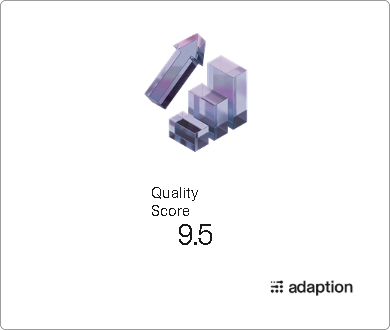
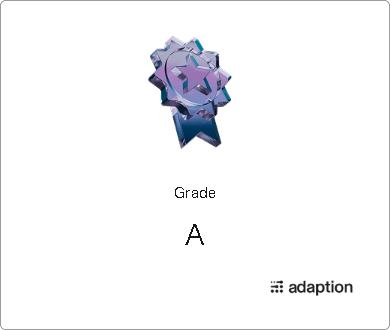
The final quality is A, with a relative quality improvement of -5.0%.
Domain
- Code (88%)
- Technology (10%)
- Governance (2%)
Language
- English (100%)
Tone
- Technical (96%)
- Analytical (4%)
Evaluation Results
Quality Gains:
Grade Improvement:
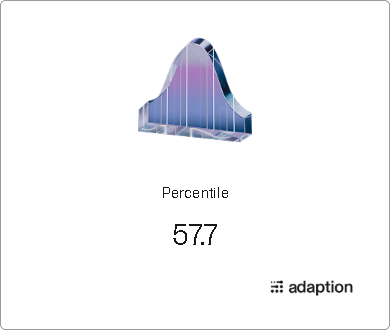
Percentile Chart:
- Downloads last month
- 16