
LeRobot documentation
reBot B601-DM
reBot B601-DM
reBot B601-DM is an open-source, low-cost robot arm from Seeed Studio for embodied-AI and imitation learning. It comes as a follower arm (the B601-DM, a 6-DOF arm plus gripper driven by Damiao CAN motors) and a leader arm (the StarArm102 / reBot Arm 102, driven by FashionStar UART smart servos) used to teleoperate it.
This page covers calibration and teleoperation for both single-arm and bimanual (dual-arm) setups.
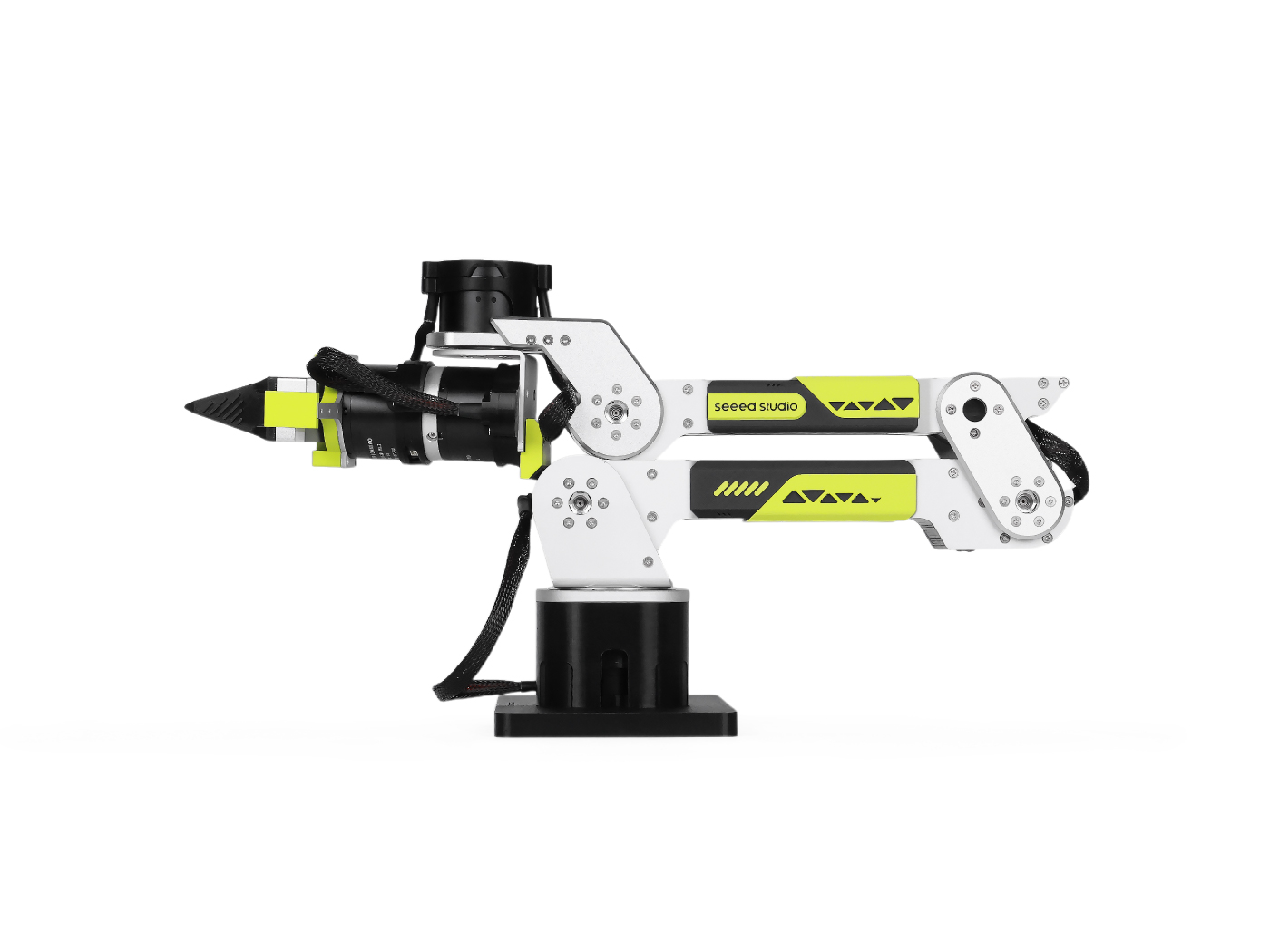
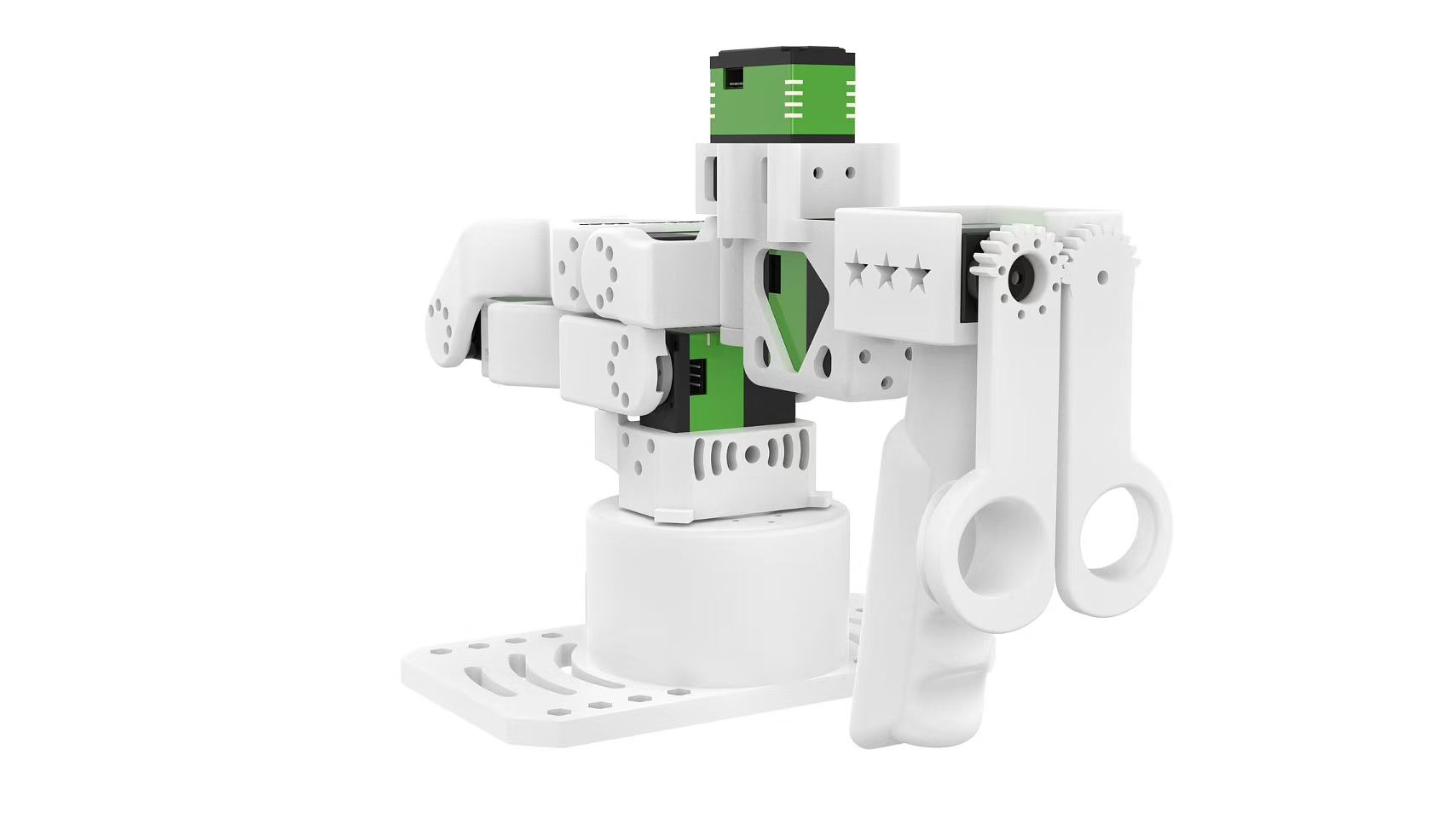
Left: the B601-DM follower at its zero position. Right: the reBot Arm 102 leader at its zero position. Images courtesy of Seeed Studio.
Install LeRobot 🤗
Follow our Installation Guide, then install the reBot support:
pip install -e ".[rebot]"This pulls in motorbridge (CAN motor control for the B601-DM follower) and motorbridge-smart-servo (FashionStar UART servos for the reBot Arm 102 leader).
Registered device types
| Type | Kind |
|---|---|
rebot_b601_follower | single-arm B601-DM follower robot |
bi_rebot_b601_follower | bimanual (dual-arm) follower robot |
rebot_102_leader | single-arm reBot Arm 102 leader teleoperator |
bi_rebot_102_leader | bimanual (dual-arm) leader teleoperator |
The bimanual types compose two single-arm instances and namespace each arm’s
observation/action keys with a left_ / right_ prefix. Per-arm settings are
passed through nested left_arm_config.* / right_arm_config.* arguments.
Find the USB ports
For each device, find the USB port associated with its motor bus using:
lerobot-find-port
On Linux, remove `brltty` (`sudo apt remove brltty`) so it does not hold the leader's USB serial port. You may also need to grant access to the serial devices: `sudo chmod 666 /dev/ttyACM* /dev/ttyUSB*`.
Calibration
Neither arm stores a persistent hardware calibration: every time it connects, the motors are re-zeroed against the pose the arm is physically holding. Calibration simply records that zero pose. When prompted, manually move the arm to its zero position (the default sit-down pose shown above, gripper fully closed) and press ENTER.
Follower (B601-DM)
lerobot-calibrate \
    --robot.type=rebot_b601_follower \
    --robot.port=/dev/ttyACM0 \
    --robot.id=follower \
    --robot.can_adapter=damiao
Leader (reBot Arm 102)
lerobot-calibrate \
    --teleop.type=rebot_102_leader \
    --teleop.port=/dev/ttyUSB0 \
    --teleop.id=leader
Teleoperation
Once both arms are calibrated, drive the follower with the leader. The follower talks to its CAN bus through a Damiao serial bridge (can_adapter=damiao, the default) or a SocketCAN adapter (can_adapter=socketcan). See the OpenArm page for more details on the SocketCAN adapter configuration.
lerobot-teleoperate \
    --robot.type=rebot_b601_follower \
    --robot.port=/dev/ttyACM0 \
    --robot.id=follower \
    --robot.can_adapter=damiao \
    --teleop.type=rebot_102_leader \
    --teleop.port=/dev/ttyUSB0 \
    --teleop.id=leader
The leader and follower share the same joint names (`shoulder_pan, shoulder_lift, elbow_flex, wrist_flex, wrist_yaw, wrist_roll, gripper`), so leader actions map directly onto the follower.
If the motion of a joint is reversed, flip its sign in the leader’s joint_directions (the gripper also carries a scale to widen its range to the follower):
lerobot-teleoperate \
    --robot.type=rebot_b601_follower \
    --robot.port=/dev/ttyACM0 \
    --robot.can_adapter=damiao \
    --teleop.type=rebot_102_leader \
    --teleop.port=/dev/ttyUSB0 \
    --teleop.joint_directions='{"shoulder_pan":-1,"shoulder_lift":-1,"elbow_flex":1,"wrist_flex":1,"wrist_yaw":1,"wrist_roll":-1,"gripper":-6}'
Recording datasets
Swap lerobot-teleoperate for lerobot-record (with the same --robot.* / --teleop.* arguments, plus --dataset.*) to record demonstrations for training. See Imitation Learning for Robots for the full workflow.
For hardware assembly and wiring, see the Seeed Studio reBot wiki.
Update on GitHub